
What Is Pediatric Flatfoot?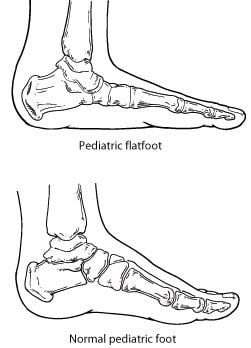
Flatfoot is common in both children and adults. When this deformity occurs in children, it is referred to as “pediatric flatfoot.” Although there are various forms of flatfoot, they all share one characteristic – partial or total collapse of the arch.
Pediatric flatfoot can be classified as symptomatic or asymptomatic. Symptomatic flatfeet exhibit symptoms such as pain and limitation of activity, while asymptomatic flatfeet show no symptoms. These classifications can assist your foot and ankle surgeon in determining an appropriate treatment plan.
Symptoms
Flatfoot can be apparent at birth or it may not show up until years later. Most children with flatfoot have no symptoms, but some have one or more of the following symptoms:
- Pain, tenderness, or cramping in the foot, leg, and knee
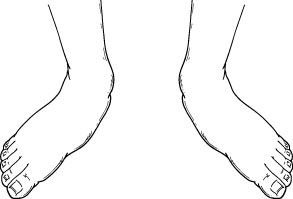
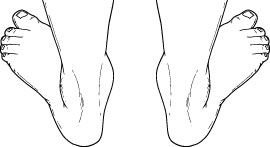
- Outward tilting of the heel
- Awkwardness or changes in walking
- Difficulty with shoes
- Reduced energy when participating in physical activities
- Voluntary withdrawal from physical activities
Diagnosis
In diagnosing flatfoot, the foot and ankle surgeon examines the foot and observes how it looks when the child stands and sits. The surgeon also observes how the child walks and evaluates the range of motion of the foot. Because flatfoot is sometimes related to problems in the leg, the surgeon may also examine the knee and hip.
X-rays are often taken to determine the severity of the deformity. Sometimes additional imaging and other tests are ordered.
Non-surgical Treatment
If a child has no symptoms, treatment is often not required. Instead, the condition will be observed and re-evaluated periodically by the foot and ankle surgeon.
Custom orthotic devices may be considered for some cases of asymptomatic flatfoot.
When the child has symptoms, treatment is required. The foot and ankle surgeon may select one or more of the following non-surgical approaches:
- Activity modifications. The child needs to temporarily decrease activities that bring pain as well as avoid prolonged walking or standing.
- Orthotic devices. The foot and ankle surgeon can provide custom orthotic devices that fit inside the shoe to support the structure of the foot and improve function.
- Physical therapy. Stretching exercises, supervised by the foot and ankle surgeon or a physical therapist, provide relief in some cases of flatfoot.
- Medications. Nonsteroidal anti-inflammatory drugs (NSAIDs), such as ibuprofen, may be recommended to help reduce pain and inflammation.
- Shoe modifications. The foot and ankle surgeon will advise you on footwear characteristics that are important for the child with flatfoot.
When Is Surgery Needed?
In some cases, surgery is necessary to relieve the symptoms and improve foot function. The surgical procedure or combination of procedures selected for your child will depend on his or her type of flatfoot and degree of deformity.